Imagine this: you’ve spent months building your brand-designing a unique logo, creating a website, and publishing original content. One day, you discover another business using a logo that looks almost identical to yours. At the same time, someone else has copied your blog posts word-for-word and posted them on their site.
Both situations feel like a violation-but legally, they are treated very differently. This is where confusion between trademark vs copyright infringement often begins. Many people assume they are the same, but they protect entirely different aspects of intellectual property.
Understanding this difference is not just for lawyers. It’s essential for business owners, creators, startups, and even freelancers. Misunderstanding these concepts can lead to costly mistakes, legal disputes, and damage to your reputation.
In this article, you’ll learn what each type of infringement means, how they differ, real-world examples, warning signs, and how to protect yourself effectively. We’ll also touch on how professional support like corporate investigation services can help safeguard your business interests.
What is Trademark Infringement?
Trademark infringement happens when someone uses a brand element that is confusingly similar to an existing trademark. This could include logos, brand names, slogans, or symbols that represent a business.
In simple terms, trademarks protect brand identity. They help customers recognize and trust a business.
For example, if a new company launches with a logo that closely resembles a well-known brand, customers may get confused and assume both businesses are connected. That confusion is the core issue in trademark cases.
What trademarks protect:
- Brand names
- Logos and symbols
- Taglines or slogans
- Unique packaging styles
Real-world example:
If a small clothing brand uses a swoosh-like logo similar to a global sports brand, even if unintentionally, it may lead to legal action because it creates confusion among consumers.
Key concept: Consumer Confusion
The law focuses on whether the average customer might mistake one brand for another. If the answer is yes, it could be considered infringement.
What is Copyright Infringement?
Copyright infringement occurs when someone uses another person’s original work without permission. Unlike trademarks, copyright protects creative expression, not brand identity.
This includes:
- Written content (blogs, books, articles)
- Music and audio
- Videos and films
- Graphic designs and artwork
- Software and digital creations
Simple definition:
If you copy, reproduce, or distribute someone else’s creative work without authorization, you may be committing copyright infringement.
Examples:
- Copying a blog post and publishing it on your website
- Using images from Google without proper licensing
- Uploading someone else’s video content without permission
Key concept: Unauthorized Use
The main issue here is not confusion—it’s whether the work was used without the creator’s consent.
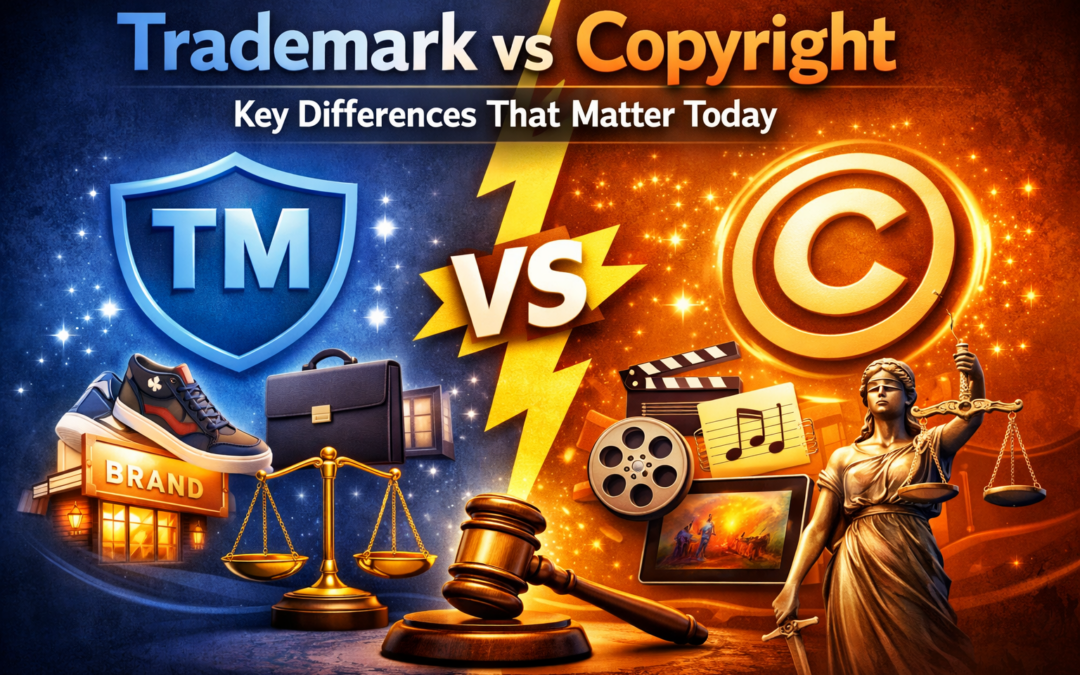
Trademark vs Copyright: Core Differences
Understanding the distinction becomes easier when you compare them side by side:
| Aspect | Trademark | Copyright |
| Purpose | Protects brand identity | Protects creative expression |
| What’s Protected | Logos, names, slogans | Content, music, videos, designs |
| Legal Focus | Consumer confusion | Unauthorized copying |
| Duration | Can last indefinitely (renewable) | Limited duration (author’s life + years) |
| Registration | Not mandatory but beneficial | Automatic upon creation |
In short, trademarks are about who you are as a brand, while copyrights are about what you create.
Key Signs You Might Be Infringing
Sometimes infringement isn’t intentional—it happens due to lack of awareness. Here are common warning signs:
- You’re using a logo or name that resembles an existing brand
- Your website content closely mirrors another site
- You’ve downloaded and used images without checking licensing
- Your design or product looks “too similar” to an existing one
Even small similarities can lead to legal trouble if they cross certain boundaries. This is why businesses often rely on corporate investigation processes to verify originality and avoid risks before launching products or campaigns.
Real-Life Examples to Make It Clear
Example 1: Brand Name Imitation (Trademark Issue)
A startup launches a café named “Starbocks” with a green circular logo. Even if the spelling is slightly different, customers might associate it with a well-known global coffee brand.
Why it’s trademark infringement: Because it creates confusion and takes advantage of an established brand identity.
Example 2: Copying an Article (Copyright Issue)
A blogger copies an entire article from another website and publishes it without permission or credit.
Why it’s copyright infringement: Because the content is original creative work and was used without authorization.
These examples highlight how one focuses on brand confusion, while the other deals with content theft.
Legal Consequences You Should Know
Ignoring intellectual property laws can lead to serious consequences:
1. Legal Notices
A legal notice is often the first warning sign that something is wrong. In most cases, you’ll receive a cease-and-desist letter, which is a formal request from the owner asking you to immediately stop using their brand name, logo, or content.
This letter may also ask you to:
- Remove the infringing material from your website or platform
- Stop selling certain products
- Provide written confirmation that you won’t repeat the action
While it may not seem serious at first, ignoring such a notice can quickly escalate the issue into a lawsuit. It’s always best to take it seriously and respond promptly.
2. Financial Penalties
If the issue goes to court and you are found guilty of infringement, you may have to pay monetary damages. These penalties are meant to compensate the original owner for their losses.
This could include:
- Loss of business or revenue
- Damage to brand value
- Profits you earned using their intellectual property
In some cases, courts may also impose additional fines as a deterrent. For businesses, especially small ones, these costs can be financially draining.
3. Lawsuits
When disputes are not resolved through notices or settlements, they can turn into full legal battles. Lawsuits related to intellectual property can be time-consuming, complex, and expensive.
You may need to:
- Hire legal experts
- Attend multiple hearings
- Submit evidence and documentation
These cases can stretch over months or even years, consuming both time and resources. This is why many businesses try to resolve issues early before they reach this stage.
4. Reputation Damage
Beyond legal and financial consequences, infringement can seriously harm your brand image. Customers value originality and trust.
If your business is accused of copying or misusing someone else’s work:
- Customers may lose confidence in your brand
- Partners and investors may hesitate to work with you
- Your credibility in the market can decline
In today’s digital world, negative news spreads quickly, making reputation damage even harder to recover from.
5. Platform Restrictions
Online platforms like websites, marketplaces, and social media take intellectual property violations very seriously. If someone reports your content or brand for infringement, platforms may take immediate action.
This can include:
- Removing your content or listings
- Temporarily suspending your account
- Permanently banning your profile or store
For businesses that rely heavily on online presence, this can result in loss of traffic, sales, and visibility overnight.
This is why many organizations conduct internal audits or hire professionals to identify potential risks early.
How to Avoid Infringement (Practical Tips)
Prevention is always better than cure. Here are practical steps to stay safe:
1. Create Original Content
Creating original content is the safest and most powerful way to avoid infringement issues. When you produce your own blogs, designs, videos, or branding materials, you automatically own the rights to them.
Instead of copying or “taking inspiration” too closely from competitors, focus on your unique voice, ideas, and creativity. Even if you refer to existing content for research, always rewrite it in your own words and add your own perspective.
For businesses, originality also builds trust and credibility. Customers can easily tell when something feels copied versus authentic. In the long run, original work not only protects you legally but also strengthens your brand identity.
2. Conduct Proper Research
Before launching a brand name, logo, or slogan, it’s important to check whether something similar already exists. Many businesses skip this step and later face legal notices or rebranding costs.
Start by searching online, checking domain availability, and reviewing social media handles. You can also look into trademark databases to ensure your chosen name or logo is not already registered or too similar to another brand.
This step is especially crucial for startups. A small investment in research today can save you from major legal and financial trouble later. It also ensures that your brand stands out instead of blending into existing ones.
3. Use Licensed Materials
Using images, music, or videos from the internet without checking their usage rights is one of the most common mistakes people make. Just because something is available online does not mean it’s free to use.
Always choose content that is:
- Royalty-free
- Licensed for commercial use
- Purchased from trusted platforms
There are many websites that provide high-quality licensed materials, but each comes with its own terms. Some may require attribution, while others may restrict commercial usage.
Taking a few minutes to check licensing details can prevent serious legal complications and ensure you are respecting the creator’s rights.
4. Ask for Permission
If you want to use someone else’s content—whether it’s an image, article, video, or design—the best approach is to ask for permission. This can be done through email or a formal agreement.
Getting written consent not only protects you legally but also shows professionalism and respect for the original creator. In many cases, creators are open to sharing their work if proper credit is given or a fee is paid.
Never rely on assumptions like “everyone is using it” or “it’s already online.” Without permission, you could still face infringement claims.
5. Consult Experts
Sometimes, even after taking precautions, it can be difficult to determine whether something is legally safe to use. This is where expert guidance becomes valuable.
Legal professionals can help you:
- Verify trademarks and copyrights
- Draft agreements and permissions
- Handle disputes or notices
In addition, professional services like corporate investigation can assist businesses in identifying risks, detecting misuse, and gathering evidence if infringement occurs.
These steps are especially important for startups and growing businesses where a single mistake can lead to major setbacks.
When to Seek Legal Help
There are situations where professional guidance becomes essential:
- You receive a legal notice or warning
- Someone copies your brand name or content
- You’re launching a new product or business
- You suspect internal misuse of intellectual property
In such cases, timely action can prevent escalation. Many businesses also rely on investigative support to gather evidence, verify claims, and strengthen their legal position.
Conclusion: Protecting What Matters
Understanding the difference between trademark and copyright infringement is not just about legal knowledge, it’s about protecting your hard work, creativity, and brand identity.
Trademarks safeguard how your business is recognized, while copyrights protect what you create. Both are equally important, but they serve different purposes.
Instead of fearing legal issues, focus on awareness and proactive steps. Respecting intellectual property not only keeps you safe but also builds trust and credibility in the long run.
At the same time, businesses today face increasing risks of duplication, fraud, and misuse. That’s where professional support becomes valuable. We at Detective Agency Delhi specialize in handling sensitive cases, including brand misuse and corporate investigation, helping businesses uncover the truth and protect their interests.
If you suspect infringement or need expert assistance, don’t hesitate to contact Detective Agency Delhi for reliable and confidential support.
Understanding the difference today can save you from costly mistakes tomorrow.
Frequently Asked Questions (FAQ’s)
1. What is the main difference between trademark and copyright infringement?
Trademark infringement involves brand confusion, while copyright infringement involves unauthorized use of creative work.
2. Do I need to register a trademark to be protected?
Registration is not mandatory, but it provides stronger legal protection and easier enforcement.
3. Is copyright automatic in India?
Yes, copyright protection exists as soon as the work is created, though registration adds legal benefits.
4. Can I use images from Google on my website?
Not always. Most images are protected, and using them without permission can lead to infringement.
5. How can businesses detect infringement early?
Regular monitoring, audits, and professional corporate investigation services can help identify risks before they become serious issues.